SPECIAL SESSION #19
From shape to sound: Measuring, Preserving, and Reactivating Sound and Media Heritage
ORGANIZED BY
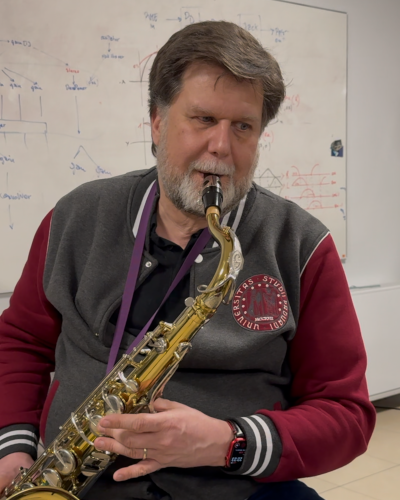 Sergio Canazza
Sergio Canazza
University of Padua, Italy
 Laura Fabbiano
Laura Fabbiano
Politechnic of Bari, Italy
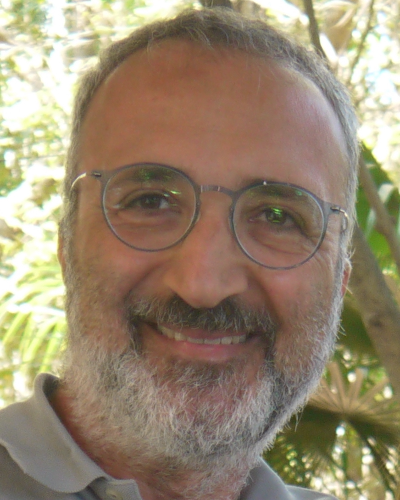 Antonio Roda'
Antonio Roda'
University of Padua, Italy
 Nicola Contuzzi
Nicola Contuzzi
Politechnic of Bari, Italy
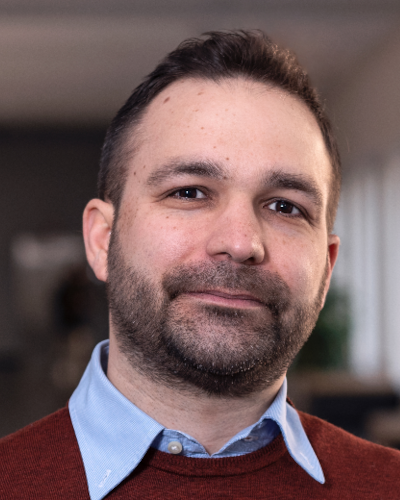 Niccolò Pretto
Niccolò Pretto
Free University of Bozen/Bolzano
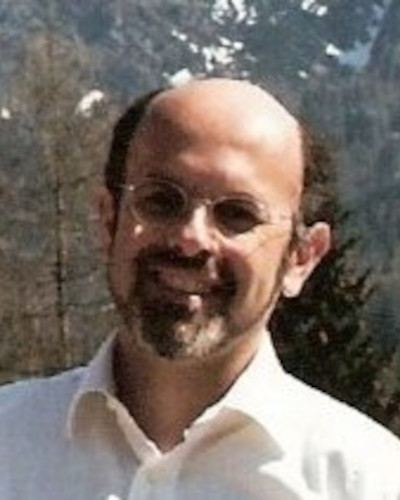 Claudio Narduzzi
Claudio Narduzzi
University of Padua, Italy
SPECIAL SESSION DESCRIPTION
Sound and media heritage poses specific challenges to cultural heritage metrology because many of its most relevant features are unstable, process-based, or only partially material. A magnetic tape, an oral-history recording, an electrophone musical instrument, an interactive installation, or an obsolete computer-music system cannot be fully understood as a static object. Each of them involves a chain of technical, cultural, and perceptual conditions: recording and playback technologies, signal degradation, acoustic behaviour, software dependencies, performance practices, user interaction, and listening contexts.
This session focuses on the role of measurement, modelling, documentation, and validation in the preservation and reactivation of such complex artefacts. It aims to bring together contributions in which cultural heritage is approached not only as something to be conserved, but also as something to be measured, interpreted, reconstructed, validated, and made accessible again. In this perspective, metrology becomes a bridge between material evidence and intangible cultural knowledge. It supports the documentation of uncertainty, the repeatability of procedures, the evaluation of restoration choices, the interoperability of data, and the transparency of preservation workflows.
The session is particularly relevant to MetroArchaeo because it extends cultural heritage measurement to sound-based and technology-dependent artefacts. These objects require interdisciplinary methods combining audio engineering, acoustics, signal processing, computer science, archival studies, musicology, conservation, museum studies, and artistic practice. Contributions may address both theoretical and applied aspects, including measurement protocols, calibration procedures, uncertainty-aware documentation, AI-assisted diagnostics, physical and data-driven modelling, philological interpretation, virtual reconstruction, emulation, migration, and user-centred access systems.
A central issue is reactivation: many sound and media artefacts preserve their meaning only when they can be listened to, performed, interacted with, or operated again. Preserving them therefore means preserving not only data or hardware, but also behaviours, processes, gestures, and contexts. This opens important questions for metrology: how can we measure what changes over time? How can we assess the reliability of a reconstructed sound, an emulated computer system, or a reactivated media artwork? How can we document the uncertainty introduced by restoration, modelling, and interpretation? How can standards, metadata, and reproducible workflows support long-term preservation and scientific accountability?
TOPICS
The session welcomes papers on the following topics, but is not limited to them:
- Audio documents preservation
- Measurement-based workflows for the digitisation, restoration, and validation of recorded sound documents, including magnetic tapes, discs, and born-digital audio. Contributions may address calibration of playback chains, signal-quality assessment, detection of degradation, uncertainty documentation, metadata standards, and reproducible preservation masters.
- Oral and speech archives preservation
- Methods for preserving spoken-word collections, oral histories, linguistic archives, and voice recordings as measurable cultural evidence. Relevant aspects include intelligibility assessment, speaker and context metadata, degradation analysis, noise and distortion measurement, ethical access protocols, and quality-control procedures for long-term archival reliability.
- Audio models of ancient and electrophone musical instruments
- Acoustic measurement, physical modelling, digital reconstruction, and perceptual validation of historical, ancient, reconstructed, or electrophone instruments. Contributions may focus on the reliability of measured parameters, comparison between original and reconstructed sound, non-invasive characterisation, 3D and acoustic data integration, and museum-oriented validation of sonic models.
- Media-art preservation and reactivation
- Metrological approaches to the documentation, conservation, migration, emulation, and re-exhibition of interactive installations, live media artworks, audiovisual environments, and process-based artistic works. Relevant issues include the measurement of system behaviour, documentation of variability, validation of reactivation choices, and traceability of hardware, software, spatial, and interaction parameters.
- Reactivation of old computer systems for musical creativity
- Recovery, emulation, reconstruction, or historically informed re-use of obsolete computer-music systems, software, interfaces, and performance environments. Contributions may address functional measurement of legacy systems, comparison between original and emulated behaviour, timing accuracy, signal output validation, documentation of performance procedures, and reliability of reconstructed creative workflows.
ABOUT THE ORGANIZERS
Sergio Canazza is Full Professor at the Department of InformationEngineering, University of Padova, where he teaches Foundations of Computer Science (Bachelor’s Degree in Computer Engineering) and Computer Engineering for Music and Multimedia (Master’s Degree in ComputerEngineering). He is Director of the Centro di Sonologia Computazionale (CSC), University of Padova (csc.dei.unipd.it).
His research activity lies at the intersection of computer engineering and music, integrating information engineering research with musicology, philology and archivistics methodologies.
His main research areas include:
- preservation, restoration, and reactivation of musical and media art cultural heritage;
- musical intelligence within the field of computational co-creativity.
He serves as Advisory Editor of the Journal of New Music Research (Taylor & Francis Group) and is author or co-author of more than 250 peer-reviewed scientific publications in international journals and conference proceedings (www.dei.unipd.it). He has chaired and served on the scientific committees of numerous international conferences and has acted as European coordinator in several national and international research projects. He served as Director of the University Multimedia and E-Learning Center (2013–2016) and as University Coordinator for Web and Multimedia (2015–2016).
He is Chairman of the Board of AudioInnova (www.audioinnova.com), a university spin-off developing audio technologies for the preservation and restoration of sound cultural heritage, as well as interactive technologies for technology-enhanced inclusive learning. He holds a patent in the field of occupational safety. He won two consecutive Golden Palm Awards (2023 and 2024) at the Cannes Artificial Intelligence Festival, recognizing the world’s most innovative and impactful Artificial Intelligence project.
Laura Fabbiano received her M.Sc. and Ph.D. degrees in Electrical Engineering from Polytechnic University of Bari, Italy, with a dissertation in the field of Electrical Measurements. She is currently Associate Professor of Mechanical and Thermal Measurements at the Department of Mechanics, Mathematics and Management of Polytechnic University of Bari.
Her research activity is mainly focused on measurement science and metrology, with particular attention to the theory of measurement uncertainty, measurement data analysis, sensors and transducers, calibration procedures, and industrial measurement methods. Since 2010, her work has increasingly addressed mechanical, thermal, and fluid-dynamic measurements, including advanced thermography, non-contact measurement techniques, acoustic and vibration measurements, and signal processing for monitoring and diagnostic applications. Her scientific production also includes contributions related to sensor-based monitoring systems, smart measurement methods, and metrological approaches for complex engineering systems.
Antonio Roda' (1971) received a Master's degree in Electronic Engineering from the University of Padova (1996), and a PhD degree in Audiovisual Studies from the University of Udine (2007). In parallel, he conducted musical studies, graduating in Violin at the Conservatory of Padova (1994) and in Composition at the Conservatory of Verona (2009). He is with the Centro di Sonologia Computazionale and his main research interests are in computational models for expressive music performance, affective computing, interactive multimodal learning environments, preservation and restoration of audio documents.
He has participated in 11 national and international research projects, among them:
- 2010-2012 DREAM (Digital Reworking/reappropriation of ElectroAcoustic Music), Culture 2007;
- 2009-2012 SRSnet: Smart Multi-Resource-Aware Sensor Network, Interreg IV;
- 2005-2006 Preservation and On-line Fruition of the Audio Documents from the European Archives of Ethnic Music, Culture 2000;
- 2004-2008 ENACTIVE (Enactive Interfaces), European Network of Excellence;
- 2000-2003 MEGA-Multisensory Expressive Gesture Applications, IST-1999-20410.
He is author and co-author of more than 100 paper on national and international journals and peer reviewed conferences. He is currently Associate Professor at the Department of Information Engineering, University of Padova and he is responsible for the courses of Data and Algorithms, Sound Design and Music Technology, Gender Knowledge and Ethics in Artificial Intelligence.
Nicola Contuzzi is an associate professor of Technology and Manufacturing Systems at University Polytechnic of Bari (Italy). He holds a MS degree in Mechanical Engineering in 2005 from the Polytechnic of Bari and a PhD in “Mechanical and Bio-mechanical design” in 2010 in the same University. His research focuses mainly on laser processing technologies (laser additive manufacturing, laser and hybrid laser/arc welding, laser ablation and scarfing), solid-state welding and Additive manufacturing (FFF, LCD, WAAM). His activities concern, also, the processes simulation and analysis by FEM, statistical, Machine Learning and Artificial Neural Network models.
Niccolò Pretto is an assistant professor at the Faculty of Engineering of the Free University of Bozen-Bolzano (UNIBZ), and he is a member of the Physical Computing Lab. His research focuses on Sound and Music Computing, developing algorithms and applications for multimedia data, cultural heritage, and oral archives. He completed his Ph.D. in Information Engineering at the University of Padova (UNIPD), where he also worked as a postdoc and adjunct professor. He also worked at the Institute of Computational Linguistics of the CNR (Pisa, Italy), the Music Technology Group of the Pompeu Fabra University (Barcelona, Spain), the University of Applied Sciences Upper Austria (Hagenberg, Austria) and the Media Interaction Lab (UNIBZ). He contributed to the development of the MPAI-CAE standard, adopted as the IEEE 3302-2022 standard, which specifies AI-based technologies for audio-related applications. Furthermore, he is a founding member of the MPAI Store Limited, a company limited by guarantee in Dundee, Scotland. He is also an associate editor of the ACM Journal on Computing and Cultural Heritage and a guest editor of two special issues on computational methodologies applied to audio collections. Currently, he is also a proceedings co-chair of the 18th International Conference on Advanced Visual Interfaces and one of the organisers of the workshop Advanced Visual Interfaces for Cultural Heritage (AVI-CH 2026).
Claudio Narduzzi was born in Venice in 1958 and obtained the Laurea degree in Electronics engineering from the University of Padua in 1982. He is a Full Professor of Instrumentation and Measurement at the Engineering School of the University of Padua.
Over the years, his research interests covered several topics and application areas related to Measurement and Instrumentation, generally focussing on advanced digital signal processing applications and networked measurement systems/IoT sensing. He participated in several national and international research programmes, including PRIN projects in 2005, 2009 and 2022, the EMRP Smart Grid II project, the 4th and 5th EU Framework Programmes. He is an IEC representative in JCGM Working Group 2 on the 4th edition of the International Vocabulary of Basic and General Terms in Metrology – VIM. He is a member of the IEEE Instrumentation&Measurement Society and the IEEE Signal Processing Society, and is the author or coauthor of over 200 scientific papers.