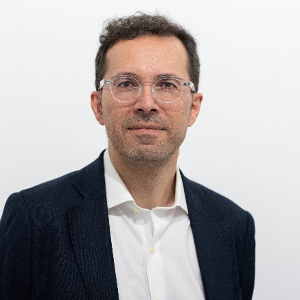
 Francesco Martellotta
KEYNOTE LECTURE
Preserving the intangible: how room acoustics shaped our culture and what we can do to save it for posterity
Francesco Martellotta
Politecnico di Bari - Department of Architecture, Construction and Design, Italy
ABSTRACT
Sound has contributed to shaping the human mind and, through the way it resonates and interacts with spaces, has fostered communication, inspired awe, evoked supernatural presences, and provided optimal conditions for the performative arts. In doing so, it has also shaped the way we interact with one another and perceive ourselves as a community. In this context, room acoustics offers a range of methods and tools to carefully characterize the sonic behavior of spaces and to describe it through numerical parameters and descriptors rooted in human sound perception. The availability of such descriptors, combined with detailed knowledge of geometry, materials, and surfaces, has contributed to the restoration of important buildings destroyed by fire (such as La Fenice Theatre and Notre Dame de Paris), allowing their interiors to be reconstructed in a manner respectful of their intangible acoustic heritage. Beyond objective descriptors, recent years have seen the development of new measurement methodologies that make it possible to capture the room response in full detail through so-called impulse responses. Thanks to the widespread use of microphone arrays, these now allow for a comprehensive description of the temporal and spatial structure of sound propagation within a space. This information, when combined with virtual reality techniques, not only enables the preservation of the acoustic heritage of buildings, but also makes it accessible to people who are unable to visit them in person. Finally, studies of the acoustics of existing buildings can provide insights into the sonic reconstruction of structures that no longer exist, as demonstrated by the increasingly popular field of archaeoacoustics. However, despite appearing straightforward, this process requires expertise and careful selection of input data in order to produce reliable results.
SPEAKER BIOGRAPHY
Francesco Martellotta is Full Professor of Building Physics at the Polytechnic University of Bari, Italy. His research focuses on building and room acoustics, particularly the acoustics of worship spaces, theatres, and cultural heritage buildings. In the last years he has been studying also innovative waste-based materials for acoustic and thermal insulation, as well as acoustic metamaterials. He has coordinated numerous national and international research projects and published extensively on architectural acoustics, sustainable materials, and indoor environmental quality. He is author/co-author of about 70 peer reviewed papers, four books, and several book chapters, and since 2020 he is included in the Stanford University “World's Top 2% Scientists”. He is active in professional associations such as the Italian Acoustical Association (AIA), where he currently holds the role of General Secretary, and Acoustical Society of America where he serves as Associate Editor of the Journal of the Acoustical Society of America since 2016.