SPECIAL SESSION #12
Innovations in Architectural and Archeological Heritage Preservation and Restoration
ORGANIZED BY
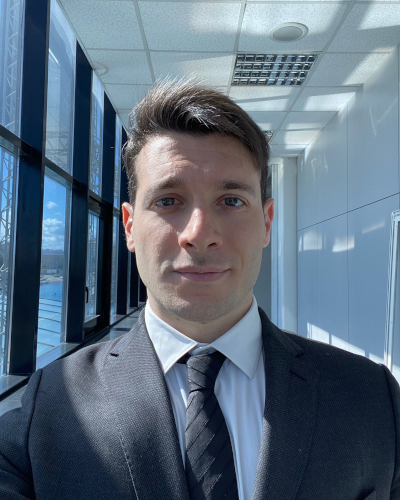 Armando La Scala
Armando La Scala
Polytechnic University of Bari, Italy
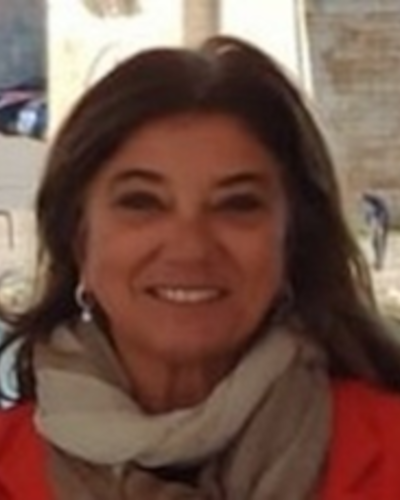 Dora Foti
Dora Foti
Polytechnic University of Bari, Italy
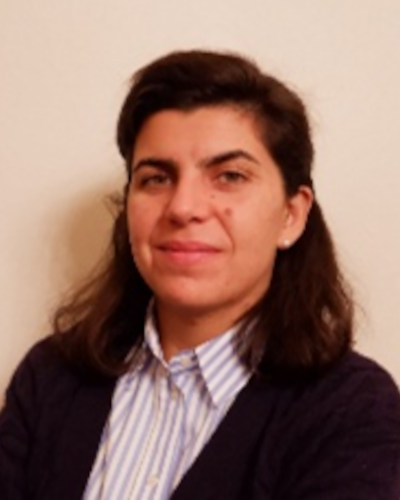 Maria Francesca Sabbà
Maria Francesca Sabbà
Polytechnic University of Bari, Italy
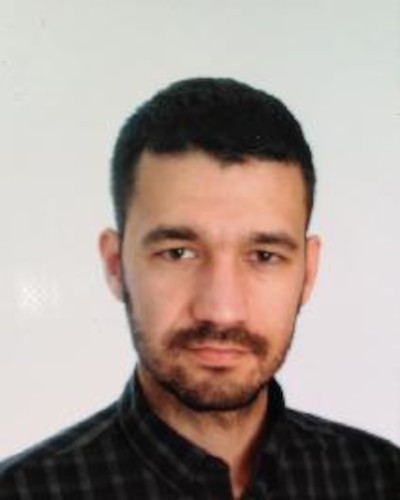 Nicola Ivan Giannoccaro
Nicola Ivan Giannoccaro
University of Salento, Italy
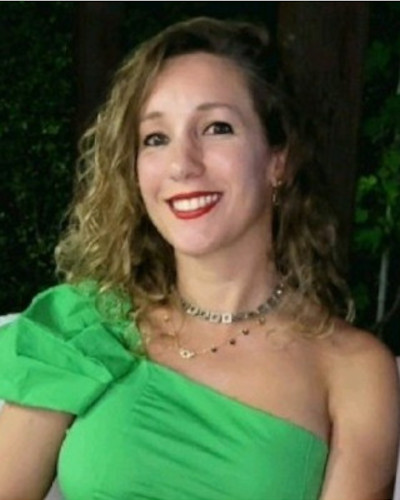 Maria Virginia Quintana
Maria Virginia Quintana
Universidad Nacional de Salta, Argentina
SPECIAL SESSION DESCRIPTION
Heritage conservation, whether archaeological or architectural, constantly poses new challenges to the research community. Innovation is therefore a key driver in this field. This Special Session aims to foster interdisciplinary exchange, bringing together efforts from different research areas around shared topics. The goal is to develop common conservation and restoration strategies and methodologies, aligned with the principles of integrated design. The Session focuses on: Structural Health Monitoring, non-destructive investigation techniques, restoration methodologies and approaches, digital tools (neural networks, machine learning, computer vision, augmented reality) for conservation, and innovative theories and applications for heritage intervention.
ABOUT THE ORGANIZERS
Armando La Scala is a research fellow (RTDa) in Structural Engineering at the Polytechnic University of Bari, within the Department of Architecture, Construction, and Design (ArCoD). His expertise lies in structural dynamic identification, bridge and infrastructure monitoring, and the application of artificial intelligence to structural health monitoring.
He obtained his Ph.D. through a joint supervision program between the Polytechnic University of Bari and the University of Alicante, where he focused on fire engineering, structural behavior and consolidation, and seismic engineering. As a co-author of scientific publications in the field of structures, he has primarily researched the fire behavior of structures, vulnerability and damage assessment of historic buildings, and dynamic identification of buildings and infrastructure.
He has participated in several national and international research projects, including PRIN 2021 S-MoSES, PRIN PNRR VIBRA, PNRR "PromptAI," Interreg "Adrion IPA," ReLuis PONTI, and ReLuis 2022-2024 WP6 – Monitoring and Satellite Data.
In terms of teaching, he has served for three years as a teaching assistant for the “Seismic Engineering” course. He has delivered a Ph.D. course titled "Seismic Risk of Masonry Bridges" and is currently teaching the course “Structural Morphology” in the Master's Degree program in Architecture at the Polytechnic University of Bari, along with the Ph.D. course titled "Innovative Devices for Seismic Risk Protection."
Dora Foti is Full Professor of Structural Engineering at the Polytechnic University of Bari. She obtained the title of European Doctor at the Universitat Politecnica de Catalunya in Barcelona, Spain in 1999.
In the field of teaching, she has given courses mainly in Structural Engineering for the degree courses in Civil Engineering and for the degree course in Architecture: Earthquake Engineering, Bridge design, Building consolidation, Static Restoration for Architecture. She has held lectures and seminars in numerous professional training courses as well as at Italian and foreign universities and research institutes. She is the author of over 250 scientific publications in the field of Structures, where she mainly developed the topics related to the seismic behavior of structures, the study of dissipation and isolation systems for steel and reinforced concrete structures, vulnerability and damage assessment in historical buildings, the dynamic identification of buildings and infrastructures and the study of the effects of dynamic actions on bridges, innovative materials for constructions. She has participated in numerous invited seminars both in Italy and abroad.
She was Visiting Professor at the University of California at Berkeley, at the Universitat Politecnica de Catalunya in Barcelona, at the Pontifical University of Chile.
She has participated in several national and international scientific projects, both as coordinator (Interreg Greece-Italy, ECOEST, SERIES, SERA) and member of the research team (PRIN, PON, Strategic, ReLuis, etc.). She is an experienced project auditor on behalf of national and international institutions.
She is Associate Editor of the International Journal of Advanced Structural Engineering (IASE), Springer Open, of Advances in Computational Design (ACD), An international journal and of The Open Construction and Building Technology Journal, Bentham Science Publisher, U.A.E. She has been a member of the Referees’ Committee of "Sciences and Research" since 2014. Also, she is part of the Editorial Board of several international magazines as well as being a member of the Scientific Committee of several International conferences.
Finally, she is Scientific Responsible for various conventions and framework agreements between the Polytechnic of Bari and Italian and foreign institutions.
Ph.D. Maria Francesca Sabbà is a research fellow in the Department of Architecture, Construction and Design (ArCoD) of the Polytechnic University of Bari, Italy.
Her field of interest is Structural Engineering, in particular: Earthquake Engineering, Masonry Building Behavior, and Masonry Building Consolidation. She is a co-author of 36 scientific publications in the field of Structures, where she mainly developed topics related to the seismic behavior of structures, Vulnerability and Damage Assessment in Historical Buildings, Dynamic Identification of Buildings and infrastructures, and Dissipating Frames to reduce energy consumption and seismic effects on buildings.
She has intervened some seminars/conferences both in Italy and abroad and has participated in some national and international projects:
PRIN, ReLuis; Interreg IPA Adrion; Interreg Greece-Italy.
Nicola Ivan Giannoccaro graduated with a degree in Electronic Engineering in 1996 from the Polytechnic University of Bari, where he also earned his Ph.D. in Advanced Production Systems in 2000.
In 2001, he won the competition for a University Researcher position in the academic discipline ING-IND/13 (Applied Mechanics) at the Faculty of Engineering of the University of Lecce. He was officially appointed to the role on September 15, 2001, and gained tenure in September 2004. In 2014, after obtaining the National Scientific Qualification, he won the competition for an Associate Professor position in the same discipline at the Faculty of Engineering of the University of Salento, taking office on December 1, 2014. In March 2025, he took office as a Full Professor after obtaining the required national qualification.
From 2001 to the present, serving first as a university researcher, then as an Associate Professor, and now as a Full Professor, he has carried out extensive teaching activities at the Faculty of Engineering and Industrial Engineering of the University of Salento (the former University of Lecce). This educational activity involves numerous teaching assignments and the supervision of undergraduate and graduate students, Ph.D. candidates, and postdoctoral research fellows.
His scientific activity is primarily focused on mechatronics, automation, control of mechanical systems, modal analysis, and dynamic identification. His research has yielded both numerical-analytical and experimental results, published in top-tier international journals in the mechanical and mechatronic fields.
His research and studies have been conducted both in Italy (at the University of Lecce and the Polytechnic University of Bari) and abroad in the United Kingdom (King’s College London, UK) and Japan (Department of Control Engineering, Kyushu Institute of Technology, Kitakyushu, Japan), having had the opportunity to carry out research internationally through various fellowships.
He has participated in numerous funded research projects at the national level (MURST, C.N.R., Apulia Region, PON) and the international level (Matsumae Foundation, Japan Society for the Promotion of Science, and as the Scientific Coordinator for the European Territorial Cooperation Programme Greece-Italy 2007-2013).
Furthermore, he organizes various activities at the Faculty of Engineering of the University of Salento and serves as a member of several institutional committees. He has acted as a reviewer for highly regarded international journals and publishing houses (such as Springer-Verlag). He is a member of the Editorial Board for two international journals.
María Virginia Quintana is a Research Fellow (Investigadora Asistente) at CONICET, based at the INIQUI institute of the Universidad Nacional de Salta, Argentina. She also holds positions as Adjunct Professor of Applied Mathematics at the Faculty of Engineering of UNSa and Full Professor of Numerical Methods at the Universidad Católica de Salta (UCASal).
She obtained her Ph.D. in Engineering from the Universidad Nacional de Salta in 2012, with a thesis on the dynamic analysis of beams and plates with internal hinges using analytical and numerical methods, under the supervision of Prof. Ricardo O. Grossi and Prof. Liz G. Nallim. She also holds a degree in Civil Engineering from UNSa (2005) and is currently completing a Master's in Public Policy and Development at FLACSO Argentina.
Her research focuses on computational mechanics and structural dynamics, particularly the vibration analysis of beams, plates, and frames with internal discontinuities through variational formulations and Ritz-Galerkin methods. She has also worked on damage identification in composite and laminated structures using differential evolution algorithms, and on the mechanical characterization of regional construction materials, including adobe for seismic-safe building in northwestern Argentina, self-compacting concrete with perlite waste, and the valorization of lithium-industry residues for cementitious products. More recently, her work has extended to thermo-mechanical simulation of prestressed concrete elements at high temperatures, in collaboration with the Polytechnic University of Bari.
She has led and participated in numerous competitive research projects funded by CONICET, ANPCyT, COFECYT, and the Argentine Ministry of Science and Technology, and has co-directed two doctoral theses. Her international experience includes an Erasmus Mundus research stay at the University of Bologna (2010–2011), a research visit at the University of Santiago de Chile within a Fondecyt project (2017), and an academic exchange at the University of Cundinamarca, Colombia (2019).
She is actively involved in engineering education reform, serving as coordinator and tutor for the CONFEDI competency-based training programme for engineering curricula. She has also contributed to science and technology policy at the provincial level, acting as consultant to the Salta Provincial Agency of Science and Technology and as Articulator for the Knowledge Economy and Industry 4.0 initiative of the Argentine Ministry of Productive Development.