SPECIAL SESSION #16
Diagnostic, restoration and conservation of library cultural heritage and archival materials by multidisciplinary approaches
ORGANIZED BY
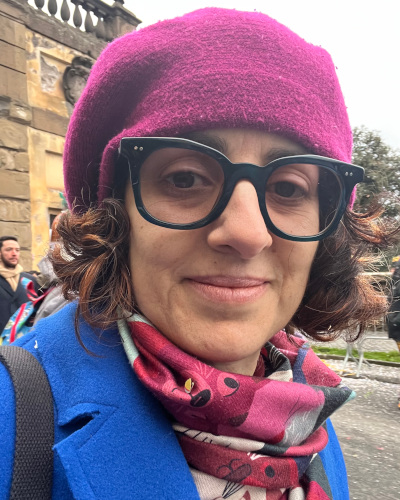 Valeria Guglielmotti
Valeria Guglielmotti
Department of Chemical Sciences and Technologies - University of Rome Tor Vergata, Italy
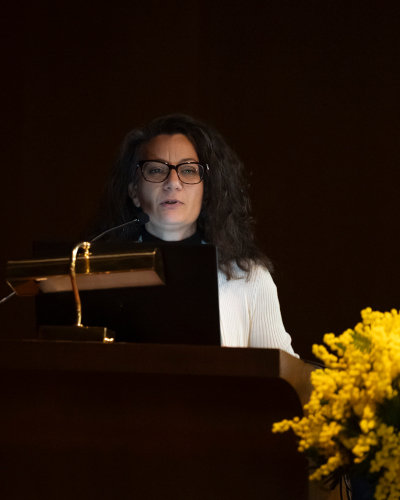 Claudia Mazzuca
Claudia Mazzuca
Department of Chemical Sciences and Technologies - University of Rome Tor Vergata, Italy
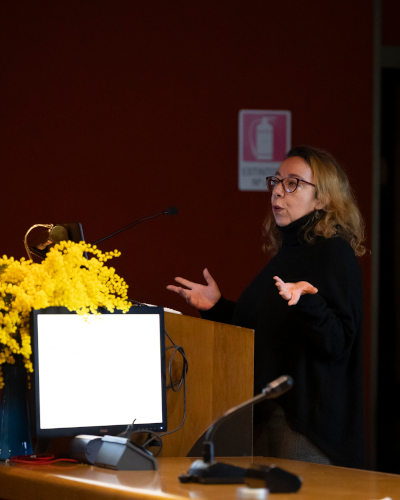 Silvia Orlanducci
Silvia Orlanducci
Department of Chemical Sciences and Technologies - University of Rome Tor Vergata, Italy
SPECIAL SESSION DESCRIPTION
This special session is dedicated to exploring a multidisciplinary approach in diagnostic, restoration and conservation of library cultural heritage and archival materials. The scope of this session is to enable the heritage science community to gain improvement in the research for diagnostics, analysis and assessment of materials of cultural heritage, by multidisciplinary approach able to, for example, identifying the cause and effects of deterioration processes, and their monitoring during and after the restoration process.
TOPICS
Significant contributions could be related to:
- The development of particular heritage equipment and techniques for research and applications on composition and structure of cultural heritage and historical documents as well as technology used to produce them together with understanding of the alteration of the materials in specific environmental conditions including in-situ non-invasive measurements;
- Establishing best practices for multi-technique analysis of samples, analytical data assessment or degradation issues;
- The design and development of new functional materials for restoration;
- The development of new sensing systems for the diagnostic analysis of both cultural heritage and environmental conditions;
- The development of structured scientific information, available from and in the archives and documentation departments of both prestigious museums and conservation centres, by means of AI-supported digital technology to making them more widely available;
- Providing international cooperation, education, training, users’ awareness, and technology transfer to research and restoration laboratories.
Overall aim: improve the state of art in the field of diagnostic, restoration and conservation of library cultural heritage and archival materials and to capitalising on the resources and expertise belonging to the different players of the scientific community to foster and enlarge the knowledge in this particular field.
ABOUT THE ORGANIZERS
Valeria Guglielmotti researcher in General and Inorganic Chemistry at “Tor Vergata” University and professor in material chemistry for the Master Degree in Conservation and Restoration of Cultural Heritage - Professional Training Course 5: Library and Archive Materials, Paper Artifacts, Photographic, Cinematographic, and Digital Materials.
Her research activity is largely dedicated to the study of structural characterizations with a focus on the use of X-rays based techniques (XRD, XRF coupled with polycapillary optics), extended also to the study of ancient pigments and substrates for Cultural Heritage applications.
In addition she is experienced in synthesis and characterization of carbon-based materials, particularly micro – and nanomaterials as nanotubes, nanodiamonds, mixed systems (conjugated polymers and carbon nanomaterials, metallic nanoparticles and C nanostructures) snd their use in composites for consolidation of paper and parchment and for innovative sensors.
Additional competencies and experience were collected on the preparation of national and international (research project) proposals, during the period spent as Innovation Manager at a high-tech incubator, as well as on the administrative management of national/regional and EU-funded projects.
ORCID link: orcid.org
carbonsite.uniroma2.it
Claudia Mazzuca professor in Physical Chemistry at the University of Rome Tor Vergata for Master Degree in Chemistry and in Conservation and Restoration of Cultural Heritage - Professional Training Course 5: Library and Archive Materials, Paper Artifacts, Photographic, Cinematographic, and Digital Materials.
In her research, Prof. Mazzuca uses various experimental techniques (primarily spectroscopic) to obtain the chemical and physical characterization of biological systems such as polysaccharides and proteins. Her research in the field of Cultural Heritage focuses primarily on two closely related topics:
- Characterization of the composition and state of aging of materials such as paper, wood, adhesives, leather, and parchment using non-invasive or microinvasive spectroscopic techniques.
- Development of innovative gel-based methods for localized and targeted cleaning of paper or wood materials. This study requires detailed chemical and physical characterization of the gels under study to ensure they meet biocompatibility requirements and compatibility with the material being treated and any specific cleaning agents to be incorporated into the gel.
ORCID link: orcid.org
physchem.uniroma2.it
Silvia Orlanducci associate professor of General and Inorganic Chemistry and Material Chemistry at the University of Rome Tor Vergata for Master Degree in Chemistry and in Conservation and Restoration of Cultural Heritage - Professional Training Course 5: Library and Archive Materials, Paper Artifacts, Photographic, Cinematographic, and Digital Materials (CorLib). She is currently the Coordinator of the CorLib course.
Her research focuses on the development and characterization of advanced nanomaterials. Her main areas of interest include the controlled synthesis of materials via CVD, chemical functionalization, morphological and structural characterization using advanced techniques (SEM, TEM, Raman spectroscopy), and the exploration of the properties of the materials produced. In her research activity she proposes the use of nanodiamonds as additive for cultural heritage conservation and preservation, along with the development of Raman and nanoparticles for SERS applications used for the identification of pigments of ancient artifacts.
ORCID link: orcid.org
carbonsite.uniroma2.it