SPECIAL SESSION #11
Non-Invasive Systems and Techniques for "On-Site" Monitoring and Diagnosis
ORGANIZED BY
 Livio D'Alvia
Livio D'Alvia
Sapienza University of Rome (BeSSA), Italy
 Erika Pittella
Erika Pittella
Sapienza University of Rome (DIET), Italy
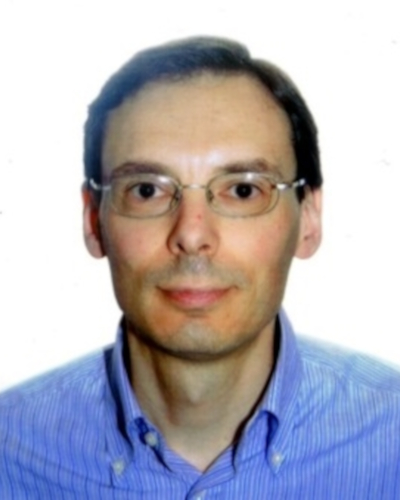 Emanuele Piuzzi
Emanuele Piuzzi
Sapienza University of Rome (DIET), Italy
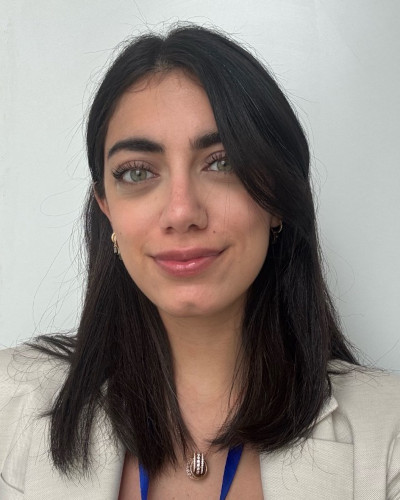 Chiara Bencivenga
Chiara Bencivenga
Sapienza University of Rome (DIMA), Italy
SPECIAL SESSION DESCRIPTION
On-site monitoring of both archaeological sites and museum exhibits is of fundamental importance for the correct preservation of cultural heritage, preventing degradation phenomena through appropriate countermeasures taken at an early stage.
An effective and proactive monitoring entails two main aspects: constant measurement of the quality of the environment, both inside a museum or at a historical site, and periodical assessment of the preservation status of cultural heritage artifacts.
TOPICS
Within such context, this special session focuses on the latest trends in sensors and sensor networks for environmental monitoring and non-destructive testing and diagnosis techniques for historical artifacts, including, for example:
- Environmental sensors (temperature, humidity, pressure, etc.);
- Sensors for pollution (particle matters and gaseous compounds);
- Vibration sensors;
- Microwave diagnostic systems (spectroscopy, GPR, resonance methods, etc.);
- Optical methods (visible, IR, UV, etc.);
- X-ray scanners;
- Thermal imaging;
- Deformation analysis;
- Sensor networks.
ABOUT THE ORGANIZERS
Livio D'Alvia Graduated in Electronic Engineering in 2013 and received the Ph.D. in Industrial and Management Engineering in 2018 from the University of Roma Tre and Roma La Sapienza, respectively. Currently, he is an Assistant Professor of Industrial and Mechanical Measurements at the University of Rome La Sapienza, Italy. His current research spans from the measurements for industrial and biomedical applications to the measurements for Cultural Heritage. In particular, his main research tracks focus on the measurement of environmental parameters that involve decay effects on materials. He is also interested in the study of the moisture levels measurement of cultural heritage materials through the non-invasive method. He is a member of the IMEKO TC26 (metrology for cultural heritage), IEEE – IMS Instrument and Measurement Society TC18 (environmental measurement), IEEE Sensors Council.
Erika Pittella is currently an Associate Professor of Electrical and Electronic Measurements at the Department of Information Engineering, Electronics and Telecommunications, Sapienza University of Rome.
Interests:
- TDR and FDR techniques for measuring material dielectric characteristics;
- characterization of composite and 3D printed materials;
- remote sensing for monitoring and diagnosing patients;
- impedance-based techniques for monitoring cardio-respiratory activity;
- wearable sensors.
Emanuele Piuzzi received the M.S. (cum laude) and Ph.D. degrees in electronic engineering from the Sapienza University of Rome, Rome, Italy, in 1997 and 2001, respectively. He is currently an Associate Professor of Electrical and Electronic Measurements with the Department of Information Engineering, Electronics and Telecommunications, Sapienza University of Rome. He has coauthored more than 150 publications. His research activities include the measurement of complex permittivity of materials, time domain reflectometry applications, and biomedical instrumentation design.
Prof. Piuzzi is a member of the IEEE I&M Society and of the Italian Group of Electrical and Electronic Measurements (GMEE).
Chiara Bencivenga is a PhD student at the Sapienza University of Rome (Italy), within the Department of Mechanical and Aerospace Engineering. Her work focuses on bioengineering and the development of biomedical instrumentation, particularly portable and non-invasive systems for cardiovascular monitoring and healthy aging. Her research interests also include industrial measurements and metrology applied to electronic and biomedical instrumentation.