SPECIAL SESSION #18
Artificial Intelligence in Archaeological Research: Methods, Applications, and Epistemological Challenges
ORGANIZED BY
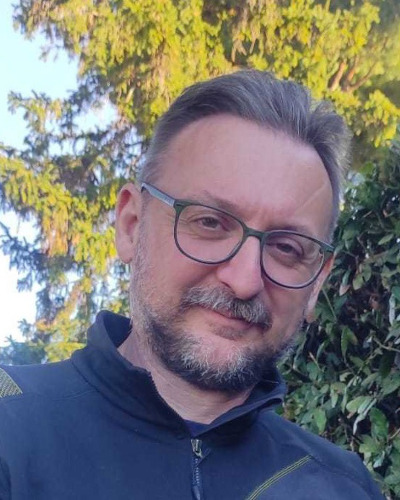 Luca Alessandri
Luca Alessandri
Groningen University
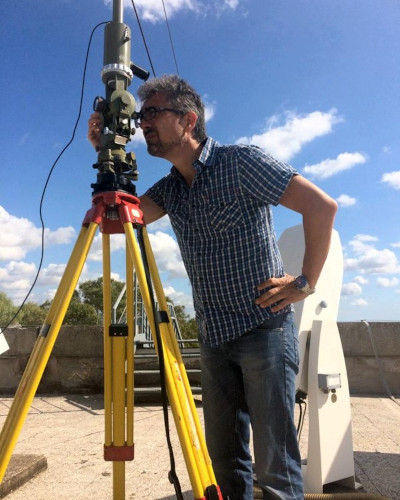 Valerio Baiocchi
Valerio Baiocchi
Sapienza University of Rome, Italy
 Maio Federico Rolfo
Maio Federico Rolfo
Tor Vergata University of Rome, Italy
SPECIAL SESSION DESCRIPTION
The integration of artificial intelligence into archaeological practice is reshaping the discipline across multiple dimensions — from remote sensing and predictive site modelling to ceramic typology, landscape analysis, and the management of large cultural heritage datasets. Machine learning algorithms, including supervised classifiers, unsupervised clustering, and neural networks, are increasingly deployed not merely as analytical tools but as instruments of interpretation, raising fundamental questions about transparency, reproducibility, and the role of domain expertise in mediating between model outputs and archaeological meaning. This session invites contributions that engage critically with AI applications in archaeology, welcoming both methodological case studies and broader reflections on the epistemological implications of data-driven approaches for the construction of archaeological knowledge. Particular attention will be given to questions of explainability — how do we make algorithmic outputs legible and defensible to a scholarly audience? — and to the interface between quantitative modelling and the interpretive traditions of the discipline.
ABOUT THE ORGANIZERS
Luca Alessandri is an archaeologist specialising in European protohistory, with a focus on Bronze and Iron Age settlement dynamics in central Tyrrhenian Italy. He has held research positions at Sapienza University of Rome and the University of Groningen, and has served as Principal Investigator of the NWO-funded project Salt and Power: Early States, Rome and Resource Control. Alongside his fieldwork and landscape archaeology research, he has developed a parallel strand of inquiry into computational and AI-based methods in archaeology, including machine learning applications to settlement pattern analysis, ceramic typology, and spatial modelling.
Valerio Baiocchi completed his high school diploma at 17 — two years ahead of the Italian average — at the Scientific High School "C. Cavour" in Rome, the oldest scientific high school in Italy, and enrolled at Sapienza University of Rome the same year. He holds dual degrees in Engineering and Geology, both from Sapienza University of Rome, obtained with top marks. He earned a PhD in Geodesy and Survey from Parthenope University of Naples (1996–1999), a Master's in Environmental Sciences from the University of Urbino (1995–1997), and a second PhD in Infrastructures and Transports from Sapienza University of Rome (2006–2009). Since 2017, he holds the National Scientific Qualification as Full Professor in the field of Geodesy and Geomatics (ssd ICAR/06). He is currently Associate Professor at Sapienza University of Rome, where his research spans geodesy, GIS, remote sensing, and environmental engineering. He is the author of approximately 260 publications in the field of geomatics. He has been recognized as "Top Reviewer" for Earth Sciences by Publons in 2017 and 2018, and as "Sentinel of Science" in 2016.
Mario Federico is Associate Professor of Prehistory and Protohistory at the Department of History, Culture and Society of the University of Rome Tor Vergata. His research focuses on human settlement dynamics in Central Italy from the Late Pleistocene through the Bronze Age, with particular expertise in cave archaeology, geoarchaeology, and Neanderthal studies. Among his main fieldwork projects are the excavations at Grotta Guattari (San Felice Circeo), the long-term investigation of Grotta Mora Cavorso at Jenne, and archaeological research at the caves of Pastena and Collepardo. He has also conducted geo-archaeological studies of the Albano Volcanic District, exploring the relationship between volcanic activity, myth, and human settlement. He has led international collaborations, including a research agreement with the University of Groningen for excavations in the Pontine area, and coordinated the PARD project on the preservation of archaeological heritage through digital imaging. He serves as a member of the PhD board in "Culture and Territory" at Tor Vergata, and as External Supervisor for PhD programs at Durham University and Sapienza University of Rome. His work has attracted over 1,000 citations and spans more than 120 publications.