SPECIAL SESSION #15
Bridging the Gap – Interdisciplinary Sciences in Cultural Heritage
ORGANIZED BY
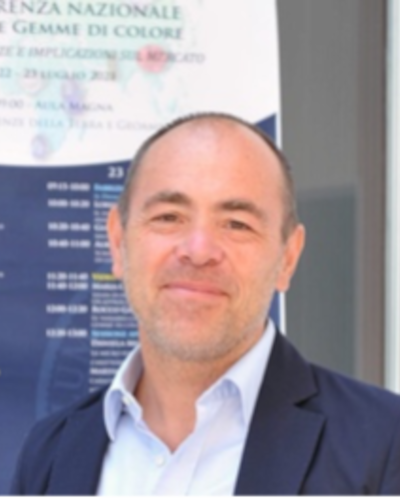 Gioacchino Tempesta
Gioacchino Tempesta
Department of Earth and Geoenvironmental Sciences - University of Bari – Italy
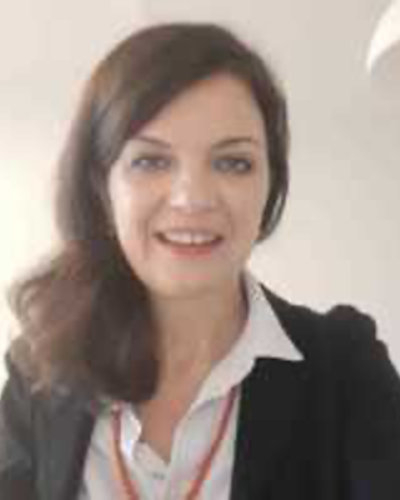 Elisabetta Neri
Elisabetta Neri
CNRS, UMR Orient&Méditerranée
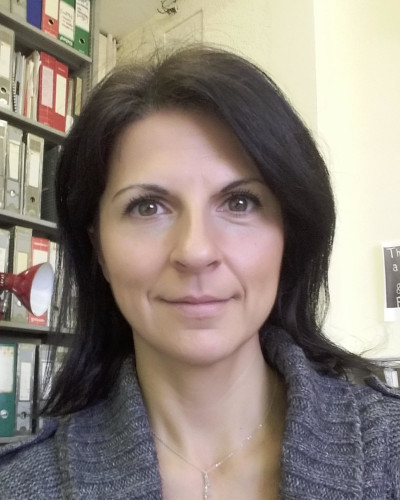 Monia Vadrucci
Monia Vadrucci
Italian Space Agency, Rome, Italy
 Giovanna Fioretti
Giovanna Fioretti
Department of Earth and Geoenvironmental Sciences - University of Bari – Italy
SPECIAL SESSION DESCRIPTION
This session invites contributions that explore how interdisciplinary approaches are profoundly reshaping cultural heritage studies. We seek research examining the convergence between Archaeology and Archaeometry, highlighting the capacity of diagnostic sciences to integrate complementary perspectives and operate synergistically, delivering a comprehensive and nuanced understanding of cultural heritage assets.
The evolution of the field is increasingly driven by the ability to combine physical, chemical, and digital methodologies, within a holistic and non-destructive framework that enables in-depth investigation without compromising the integrity of materials. It is precisely the complementarity among these methodologies, rather than any single technique, that generates new knowledge: on material composition, production techniques, degradation processes, and effective conservation strategies. This integrated paradigm is transforming both scientific understanding and conservation practice, while simultaneously supporting the development of more accurate, engaging, and inclusive museum narratives.
We welcome contributions addressing, among others, the following themes: innovations in the integration of multiple and complementary diagnostic approaches; case studies demonstrating how methodological convergence has informed conservation decisions; incorporation of scientific data into archaeological interpretive frameworks; and the development of predictive, data-driven approaches in heritage science.
"Bridging the Gap" aims to highlight the transition from descriptive archaeology towards an integrative, predictive, and fully interdisciplinary heritage science, one in which strength lies not in any individual tool, but in the ability to orchestrate diverse methodologies towards shared goals of knowledge production and cultural heritage conservation. Scholars, professionals, and researchers are encouraged to submit abstracts presenting innovative interdisciplinary methodologies, original applications, or critical reflections on the evolving landscape of cultural heritage science.
ABOUT THE ORGANIZERS
Gioacchino Tempesta is an Associate Professor at the University of Bari “Aldo Moro” specialising in mineralogy applied to cultural heritage. With a PhD in Earth Sciences his research focuses on the advanced characterisation of geomaterials including gemstones historical pigments and ancient artefacts with metal and gemstones through the implementation of non-invasive and non-destructive diagnostic protocols. As head of the “Spectroscopic Techniques for Geomaterials” laboratory he has accomplished the development of a specialised mobile laboratory equipped with portable LIBS, Raman, UV-VIS-NIR Spectroscopy and XRF instrumentation designed specifically for in-situ chemical and physical investigations of historical artefacts. His extensive research portfolio includes high-profile diagnostic projects such as the study of medieval treasures in the Basilica of San Nicola the analysis of the “Tree of Life” mosaic in Otranto Cathedral and the characterisation of illuminated medieval parchments. Recently his work has expanded into the study of natural and artificial glass used in medieval mosaics and gemstone treatment for colour enhancement. By bridging the gap between mineralogical expertise and technological innovation Professor Tempesta provides critical material insights that support both art-historical interpretation and sustainable conservation strategies a commitment reflected in his peer-reviewed publications within the international scientific community.
Elisabetta Neri is a Classic and Late Antique archaeologist and heritage scientist. She holds a PhD from the University of Milan. After two post-doctoral fellowships, at the Labex RESMED and at the Paris-Sorbonne University (MONARIS and LAMS), and two years as fixed-term researcher at CNRS, UMR 5060, IRAMAT, Orléans (ERC GlassRoutes), she was awarded a Marie-Curie individual fellowship at the University of Liège, and subsequently a Young Researcher grant (Next Generation EU) to continue her MSCA project at the University of Florence.
She is an associate researcher at the CNRS (UMR 8167, Orient & Mediterranée).
She is teaching in French and Italian Universities (Université Paris-Sorbonne, Université Paris-Nanterre, Université Cergy-Pontoise, Università di Pavia, Università di Firenze).
Author of more than a hundred scientific publications she practices the discipline in the archaeological field (excavations and museums) and in physico-chemical laboratories specialized in heritage sciences. The main goal of her work is connecting material culture, considered in its technical and physico-chemical components, to the existential culture (history of mentalities and religions), as revealed by written and iconographical sources, in order to reconstruct the cultural transitions between the Roman empire and its heirs (Byzantine empire and Germanic kingdoms). This approach, that not only interweaves different methods, deriving both from the sciences and the humanities, but also crosses the chronological boundaries imposed by academic disciplines, is reflected in her bibliography, which merges archaeology (object and monuments), cultural heritage sciences/material sciences and the history of religions, taking into consideration both the Roman and the Early Medieval periods. Collaborating, as a scientific expert, in international interdisciplinary projects, archaeological missions, physico-chemical laboratory, exhibitions, she has structured ad hoc teams, heading interdisciplinary and international projects. among these the Color2Code project, winner of a FIS3 Consolidator Grant.
Dr. Monia Vadrucci is an experimental researcher holding a PhD in Physics and a second-level master's degree, permanently based at the Italian Space Agency (ASI) within the Science and Innovation Department.
Her research activity spans a broad spectrum of topics related to nuclear physics and ionising radiation. Her main areas of interest include nuclear fusion energy development, particle accelerators for fundamental research, space applications in human exploration and life sciences, materials science, and quantum technologies. A significant part of her work is dedicated to methodologies applied to historical and cultural heritage: through the use of advanced non-destructive spectroscopic and microscopic techniques, she is involved in the characterisation and diagnostic analysis of artworks and archaeological artefacts, as well as in the development of innovative conservation and treatment approaches, with a strong emphasis on non-invasive, sustainable, and reversible methods.
She is the author of numerous scientific publications in international peer-reviewed journals, serves as a contract lecturer in Physics at university level, and acts as project manager for national and international collaborative programmes in the field of metrology applied to cultural heritage.
Giovanna Fioretti (Bari, Italy, 1984) is an archaeometrist specializing in the scientific analysis and conservation of cultural heritage materials. She graduated with honors from the University of Bari in 2010 and earned a PhD in Earth Sciences in 2016, focusing on the decay processes of carbonate stones in cultural heritage.
She has developed her research career within major academic and research institutions, holding research appointments at the University of Bari and serving as Adjunct Professor of Petrography Applied to Cultural Heritage at the Polytechnic University of Bari (2017–2020). She coordinated research projects at the Fondazione Pasquale Battista (2017–2021) and was subsequently appointed as a fixed-term researcher (RTDa) at the University of Bari (2020–2023), where she advanced archaeometric studies on lithic materials alongside research on wall paintings, ceramics, and stone artifacts.
In 2023–2024, she held a postdoctoral position at CNRS (Paris) within the ERC-funded project Lateurope, contributing to the archaeometric characterization of lithic assemblages from key prehistoric sites in southern Italy.
She is author of numerous scientific publications in international peer-reviewed journals, she has edited several volumes, including the proceedings of three national congress on Apulian cultural heritage (2020, 2022, 2025). She has served as guest editor of special issues and regularly participates in national and international conferences.
Her research focuses on diagnostic techniques applied to cultural heritage, with particular expertise in natural and artificial lapideous materials (cherts, stone, mortars, plasters, ceramics). She integrates archaeometric approaches with digital methodologies to enhance analysis, interpretation, and dissemination of cultural heritage.