SPECIAL SESSION #14
Archaeometric And Digital Tools For The Investigation And The Description Of Etruscan Sites And Their Finds
ORGANIZED BY
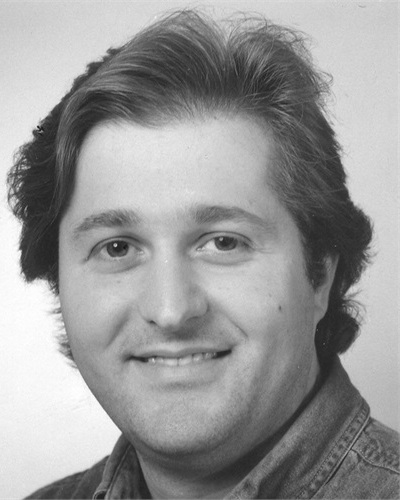 Danilo Dini
Danilo Dini
Sapienza University of Rome, Italy
 Martina Bernabale
Martina Bernabale
Sapienza University of Rome, Italy
SPECIAL SESSION DESCRIPTION
The study and management of archaeological areas associated with ancient societies require the integration of multiple disciplines, including archaeology, geology, physics, chemistry, biology, engineering, architecture and computer science. Archaeometry plays a key role in reconstructing ancient technologies, material circulation and the correlation between human activities and the surrounding environment.
This session aims to bring together researchers working on the Etruscan cultural heritage through archaeometry approaches applied to archaeological artefacts and landscapes. Contributions addressing the characterization of materials, technological studies, conservation issues and the reconstruction of production processes are particularly welcome.
The session also encourages contributions focused on data integration, digital documentation, and spatial analysis, including the use of augmented and virtual reality, advanced imaging techniques, remote sensing, digital mapping, aerial photography, and 3D modelling for the study and interpretation of archaeological contexts.
By combining analytical investigations of materials with spatial and digital approaches, the session aims to foster discussion on how archaeometric data can contribute to a broader understanding of the Etruscan world and support the documentation, interpretation and dissemination of its archaeological heritage.
The objective of the session is to provide a multidisciplinary forum for researchers from different scientific backgrounds who are interested in applying archaeometry methods to the study of the Etruscan cultural landscape and its material culture.
TOPICS
Given the wide variety of functions (construction, decoration, domestic use, ritual practices, and defence) and the diversity of materials such as pigments, ceramics, stones, mortars, wood, and organic materials associated with the Etruscan archaeological record, this session welcomes contributions reporting analytical and archaeometric techniques for the characterization of archaeological materials.
Topics of interest include, but are not limited to:
- archaeometric characterization and advanced analytical techniques applied to Etruscan archaeological materials;
- studies of ancient technologies, raw material sourcing, and production processes;
- conservation science, degradation mechanisms, and material preservation;
- digital documentation, 3D reconstruction, and visualization of archaeological artefacts and contexts;
- spatial analysis and digital tools for archaeological landscapes (GIS, remote sensing, aerial and satellite imaging, data integration and use of artificial intelligence).
ABOUT THE ORGANIZERS
Danilo Dini (D.D.) is professor of Physical Chemistry at the Department of Chemistry of Sapienza University of Rome. D.D. graduated in Chemistry with a thesis on electrochromic materials at Sapienza University of Rome and has achieved the PhD degree in Materials Science in the same university. His research interests span from the study of advanced materials with special optical properties for use in photovoltaics, photoelectrochemistry, electrochromism and nonlinear optics, to the application of analytical multiparametric techniques having non-destructive and non-invasive features for the in situ and in operando characterization of materials (including cultural heritage finds). D.D. is the scientific coordinator of the project REMEDIAVI, which has been financed by Region Lazio for the general valorisation of the archaeological sites in southern Etruria. D.D. has published more than 160 works in peer-reviewed journals and the dissemination of his scientific work has allowed to reach a h-index of 48.
Martina Bernabale is currently pursuing a second PhD in Mathematical Models for Engineering, Electromagnetism, and Nanosciences at Sapienza University of Rome. She holds a master’s degree in science for the Conservation of Cultural Heritage and a PhD in Earth Sciences with a specialization in Cultural Heritage, both from Sapienza University of Rome. Her research focuses on the characterization of archaeological materials through integrated analytical approaches combining spectroscopy, microscopy, and advanced 3D imaging. In particular, she applies correlative analytical workflows that link structural, chemical, and microstructural information across multiple scales to investigate ancient technologies and material transformations. She has specific expertise in multiscale X-ray microscopy applied to cultural heritage, using non-destructive imaging to explore the internal structure of artefacts and reconstruct manufacturing processes and degradation phenomena. Her work addresses a variety of materials, including archaeological metals, pigments, mortars, ceramics, and ambers from the Phoenician, Etruscan, and Roman periods. Her current research includes the investigation of Etruscan materials from the sanctuary of Pyrgi (Santa Severa, Italy), with particular attention to gold jewellery. Through the integration of advanced analytical and imaging techniques, her work aims to shed light on ancient manufacturing technologies, material composition, and provenance issues. She collaborates with international research infrastructures, including the Centre for X-ray Tomography at Ghent University, where advanced imaging approaches are applied to the non-destructive study of cultural heritage objects.