SPECIAL SESSION #01
Multiscale and multitemporal high resolution remote sensing and non-destructive testing for archaeology and monumental heritage: From research to preservation
ORGANIZED BY
 Giovanni Leucci
Giovanni Leucci
Institute of Heritage Science - National Research Council
 Lara De Giorgi
Lara De Giorgi
Institute of Heritage Science - National Research Council
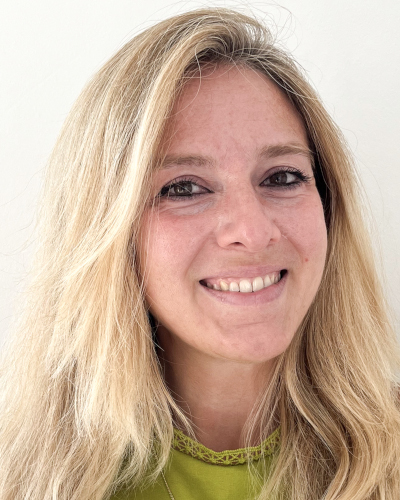 Dora Francesca Barbolla
Dora Francesca Barbolla
Institute of Heritage Science - National Research Council
 Sebastiano D' Amico
Sebastiano D' Amico
University of Malta
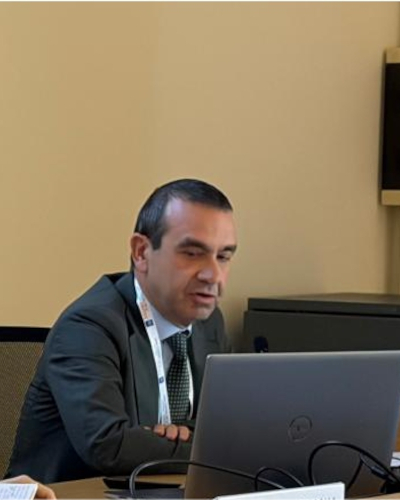 Michele Punzo
Michele Punzo
Institute of Heritage Science - National Research Council
SPECIAL SESSION DESCRIPTION
The availability of high resolution remote sensing and non destructive testing techniques provides a multiscale and multitemporal approaches in the study of ancient settlements, landscapes the reconstruction of their development over centuries and their preservation.
Nowadays, the research in both landscape archaeology and diagnosis conservation needs the integration of different techniques of high resolution remote sensing: satellite (optical and radar data), aerial (photos, IR and Lidar data) from airplanes and UAVs, ground (integration of different geophysical techniques, field walking, DGPS topographical surveys), non destructive testing. The session aims to introduce new field surveys, new approaches and new integrations and analyses of geo-archaeological data for the study of the archaeological sites in order to enhance the knowledge of the investigated area related to historical reconstruction, production of tools for preventive archaeology and preservation of archaeological and monumental heritage; about the last task very useful are also non-invasive diagnosis through micro-geophysics.
TOPICS
Topics include, but are not limited to:
- Satellite remote sensing for archaeology using optical and radar data: new perspectives, semiautomatic and automatic approaches for extracting cultural information, study of the interconnection between environmental changes and dynamics of human frequentation;
- Aerial archaeology: from historical and traditional air-photos to IR and Lidar data;
- Integration of ground remote sensing techniques (geophysical prospecting) and field walking and DGPS topographical surveys for the study of ancient settlements and landscapes;
- Integration of non-invasive methods for preservation and protection of monumental heritage (micro-geophysics);
- Integrated Geophysical Methods in archaeological sites;
- Ancient hazard risk in the geo-archaeological record, as floods, landslides, earthquakes and tsunamis;
- Climatic and anthropogenic causes of ancient environmental and vegetational changes;
- Managing hillslope instability and soil erosion problems in the past;
- Application and integration of non-invasive EM methods (e.g. GPR, HSR, IR Thermography, etc.) in NDT for in situ analysis of ancient buildings;
- Marine geophysics;
- Integrated use of drone and geophysics for archaeology and monumental heritage.
ABOUT THE ORGANIZERS
Giovanni Leucci is a research director and head of the Lecce branch of the Institute of Heritage Science - National Research Council (ISPC – CNR). He received MS degree in Physics from the University of Salento and PhD in Environmental Geophysics from the University of Messina. He has twenty years working on all aspects of exploration geophysics with more than 300 publications and many international awards. He is scientific director of the laboratory of geophysics applied to archaeology and monumental heritage at ISPC-CNR. He has participated in numerous archaeo-geophysics campaigns in prestigious archaeological sites (Petra-Jordan, Hierapolis and Sagalassos - Turkey, Durres-Albany, the Roman ships of Pisa, Tindari, Ventarrón-Peru, Pompeii, Roman Forus, etc.).
He is scientific evaluator for:
- The IUGS and UNESCO for the evaluation of candidate sites to the inclusion in the World Heritage list;
- the National Research Council of Romania, the German Research Foundation, the Czech Research Foundation, the Agency for Science and Higher Education of ENQA (European Association for Quality Assurance in Higher Education) of the Croatian Government for the evaluation of national and international research projects.
For additional information see:
Lara De Giorgi is a first technologist at the Institute of Heritage Science (ISPC-CNR). She is a committed, knowledgeable and capable Research Fellow. Extensively published in theoretical and experimental work, with significant expertise in the field of applied geophysics. Highly experienced in project, design, and construction of new instruments. She is the Scientific director of the laboratory of geophysisics and she is working within numeros project programs related to the geophysics applied to archaeology and cultural heritage.
For additional information see:
Dora Francesca Barbolla is a research at the Institute of Heritage Science - National Research Council (ISPC – CNR). She received MS degree in Geology from the University of Napoli Federico II and PhD in Biological and Environmental Sciences and Technologies from the University of Salento. She has experience on environmental geophysical surveys in the broadest sense (risk of hydrogeological and water instability in areas of archaeological interest and historical centers with ongoing activity), modeling of the first meters of the subsurface, rock characterization using geophysical parameters, development of new methodologies for integrated geophysical surveys and data processing. She has participated in numerous archaeo-geophysics campaigns in prestigious archaeological sites.
For additional information see:
Sebastiano D'Amico is Head of the Department of Geosciences at University of Malta. He received his degree in physics from University of Messina (Italy) and holds a PhD in Geophysics. From 2005 to 2007 he joined the Istituto Nazionale di Geofisica e Vulcanologia (INGV) in Rome. In 2007 he moved to U.S.A. to join the Saint Louis University (Earth and Atmospheric Sciences Department). He joined University of Malta in 2010. His research interests are in the applied aspects of geophysics and earthquake seismology. He is the author of several publications in this field. From 2016 to 2018, he served as Vice-President of the European Seismological Commission.
For additional information see:
Michele Punzo is a Technologist at the Institute of Heritage Science of the National Research Council of Italy (ISPC-CNR). He holds a degree in Geological Sciences and a PhD in Environmental and Resource Geology. His research focuses on the development and application of non-invasive geophysical techniques for subsurface investigation, applied both to classical geological and environmental studies and to geoarchaeological research and cultural heritage conservation. His expertise includes 2D and 3D subsurface modeling, geophysical data integration, advanced signal processing, and the use of high-resolution geophysical methods such as GPR, seismic techniques, electrical resistivity tomography, and magnetometry. He is actively involved in national and European research initiatives and in scientific dissemination and training activities in the field of applied geophysics.
For additional information see: