SPECIAL SESSION #10
Measuring the Past: Studying and Preserving Historical Scientific Instruments
ORGANIZED BY
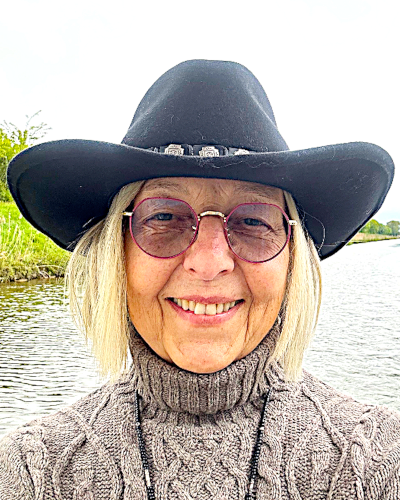 Emma Angelini
Emma Angelini
Department of Applied Science and Technology (DISAT), Polytechnic University of Turin, Turin (Italy)
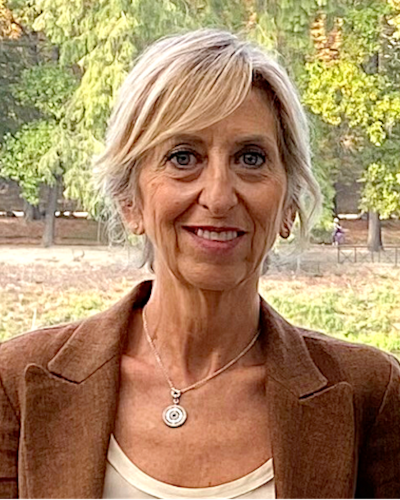 Margherita Bongiovanni
Margherita Bongiovanni
General Affairs, Institutional Relations, Archives and Libraries (ARIA), Polytechnic University of Turin, Turin (Italy)
 Panayota Vassiliou
Panayota Vassiliou
National Technical University of Athens, Athens (Greece)
SPECIAL SESSION DESCRIPTION
Historical scientific instruments represent fundamental witnesses to the development of measurement practices and metrological knowledge across different periods and cultural contexts. Devices designed for mechanical, electrical, mathematical, and astronomical measurements, such as telescopes, mechanical calculators, and precision measuring instruments, played a central role in the production, validation, and transmission of scientific knowledge. These artefacts embody the close relationship between scientific inquiry, technological innovation, and craftsmanship. In many historical contexts, scientists were directly involved in the design and construction of their instruments, while in others they collaborated with skilled instrument makers, creating a productive interaction between theoretical knowledge and technical expertise.
This session aims to explore historical scientific instruments from a multidisciplinary perspective, focusing on their design, function, measurement capabilities, and metrological significance. Particular attention will be given to the role of these instruments in the development of measurement science, as well as to issues related to their study, documentation, conservation, and valorisation as part of scientific and cultural heritage. By bringing together historians of science, metrologists, archaeometrists, conservators, and heritage scientists, the session intends to stimulate discussion on how historical measurement tools can contribute to understanding the evolution of metrology and to developing new approaches for the preservation and interpretation of scientific heritage.
TOPICS
Key topics include, but are not limited to:
- Historical Scientific Instruments and Measurement Practices : Study of instruments used for mechanical, electrical, mathematical, and astronomical measurements and their role in the development of measurement science.
- Design, Craftsmanship, and Instrument Making : The relationship between scientists and instrument makers, technological innovation, and the craftsmanship behind historical measuring devices.
- Metrological Accuracy and Reliability of Historical Instruments : Evaluation of measurement precision, calibration methods, and uncertainties in historical scientific apparatus.
- Documentation, Cataloguing, and Digital Representation : Digital recording, 3D modelling, virtual reconstruction, and databases for the study and dissemination of historical scientific instruments.
- Analytical and Diagnostic Techniques for Historical Instruments : Non-destructive analytical methods for material characterization, conservation diagnostics, and technological study.
- Conservation and Preservation of Scientific Heritage : Strategies for conservation, restoration, and preventive preservation of historical scientific instruments in museum and archival collections.
- Historical Instruments in Museums and Education : Interpretation, exhibition, and communication of historical instruments as part of scientific and cultural heritage.
ABOUT THE ORGANIZERS
Emma Angelini graduated in Chemistry from the University of Torino and is Full Professor of Applied Physical Chemistry at the Faculty of Engineering of Politecnico di Torino. Her research focuses on the protection and conservation of Cultural Heritage, particularly the degradation processes of ancient metals, the monitoring of museum environments through smart sensor technologies, the development of innovative coatings for metallic artefacts. She works in plasma chemistry, especially PECVD (Plasma Enhanced Chemical Vapor Deposition) techniques for surface modification, as well as on the corrosion and protection of metallic materials, including studies on the corrosion resistance of surface-treated steels, duplex stainless steels, sintered steels. Her work also includes research on biomaterials, particularly dental materials in simulated oral environments, aimed at evaluating corrosion resistance and ion release. She collaborates with cultural institutions such as Museo Galileo (Florence) and Fabbrica della Ruota in Pray (Biella), mainly in educational and dissemination activities. She is a member of several scientific organizations, including the International Corrosion Council (ICC) (Past President), the European Federation of Corrosion (EFC), the Italian Association of Metallurgy (AIM), the Italian Association of Archaeometry (AIAr).
Margherita Bongiovanni is an architect who has been working since 1998 at the Museum and Historical Documentation Centre of Politecnico di Torino. Since 2013, she has been responsible for the conservation, management, and enhancement of the university’s historical and scientific heritage.
Her activities include the coordination, organization, and management of cultural and research projects aimed at promoting and disseminating the historical and scientific heritage of the university. In particular, she develops initiatives, exhibitions, and public engagement activities designed to valorize archival, museum, and technical collections, contributing to the dissemination of polytechnic culture and the history of engineering and architecture education.
Her research interests also include gender studies, with a particular focus on the history, experiences, and professional trajectories of women who studied at Politecnico di Torino, contributing to research and initiatives that highlight the role of women in technical and scientific education.
Panayota Vassiliou is Professor Emeritus at the National Technical University of Athens (NTUA), where she served in the School of Chemical Engineering. Her research focuses on materials science and chemical engineering, with particular emphasis on corrosion and degradation studies of metals and other materials in cultural heritage artifacts. Her work includes the application of advanced analytical and spectroscopic techniques for the characterization of materials and corrosion products, supporting the study and preservation of heritage objects. She has contributed to numerous interdisciplinary projects bridging analytical science, conservation, and archaeometry, and has authored several publications in these fields. In addition to her academic activities, she is actively involved in initiatives for science dissemination, promoting knowledge transfer and public engagement in scientific and heritage-related topics. Her work reflects a long-standing interest in the application of materials characterization and corrosion science to the study and preservation of cultural heritage.